A sparkling clean toilet is more than just a sign of a well-maintained bathroom—it is a reflection of good hygiene, a healthier living environment, and a commitment to preventing the spread of germs. Whether you are cleaning your home, office, school, or commercial premises, the toilet deserves special attention because it is one of the most frequently used fixtures. Unfortunately, many people only give it a quick scrub, leaving behind bacteria, stains, unpleasant odours, and hidden dirt. With the right approach, however, you can transform your toilet into a spotless, fresh-smelling, and hygienic space in just a few simple steps.
At Ekom Professional Cleaners, we understand that a professionally cleaned toilet is not only visually appealing but also safer for your family, employees, customers, or guests. In this guide, we share the same practical techniques our professional cleaners use to achieve exceptional results every time.
🦠 Why Cleaning your Toilet Regularly is Important
Your toilet comes into contact with millions of bacteria every day. Without routine cleaning, harmful microorganisms, mineral deposits, mould, and unpleasant odours can quickly accumulate, making your bathroom unhygienic and uncomfortable.
Regular cleaning helps to:
✅ Eliminate harmful bacteria and viruses
✅ Prevent stubborn stains and limescale build-up
✅ Remove unpleasant odours
✅ Extend the lifespan of your toilet
✅ Improve the overall appearance of your bathroom
✅ Create a healthier environment for your family or employees
💡 Professional Tip: Clean your toilet thoroughly at least once every week. In homes with children or in busy workplaces, cleaning two to three times a week is even better.
🧰 Gather Your Cleaning Supplies
Having the right tools makes cleaning faster, easier, and more effective.
Before you begin, prepare the following:
🧤 Rubber gloves
🧴 Toilet bowl cleaner or disinfectant
🪥 Toilet brush
🧽 Scrubbing sponge
🧼 Microfiber cloths
🧴 Disinfectant spray
🧹 All-purpose bathroom cleaner
🧂 Baking soda
🍶 White vinegar
🪨 Pumice stone (for stubborn mineral stains on porcelain toilets)
🗑️ Paper towels (optional)
🚪 Step 1: Prepare the Bathroom
Preparation makes cleaning more efficient. Open the window or switch on the exhaust fan to improve ventilation and reduce exposure to cleaning fumes. Remove rugs, waste bins, air fresheners, and any other movable items around the toilet. Put on your rubber gloves before handling any cleaning products to protect your hands from bacteria and chemicals.
A clean workspace allows you to reach every part of the toilet without spreading dirt to surrounding surfaces.
🧴 Step 2: Apply Toilet Bowl Cleaner
Lift the toilet seat and apply toilet bowl cleaner generously underneath the rim, allowing it to flow around the inside of the bowl.
⏳ Allow the cleaner to sit for 10–15 minutes.
This contact time is essential because it loosens dirt, dissolves mineral deposits, kills bacteria, and makes scrubbing much easier.
⚠️ Safety Warning: Never mix bleach with vinegar, ammonia, or any other cleaning chemicals. Dangerous toxic gases can be produced.
✨ Step 3: Clean the Outside Before the Inside
Many people focus only on the bowl, yet the exterior often contains the highest concentration of germs because it is touched repeatedly throughout the day.
Spray a disinfectant onto a microfiber cloth and clean the toilet systematically from top to bottom.
Pay close attention to:
🔹 Flush handle
🔹 Water tank
🔹 Toilet lid
🔹 Toilet seat (both sides)
🔹 Hinges
🔹 Rim
🔹 Outside of the bowl
🔹 Toilet base
Working from the cleanest areas to the dirtiest prevents cross-contamination and ensures better hygiene.
🚽 Step 4: Scrub the Toilet Bowl Thoroughly
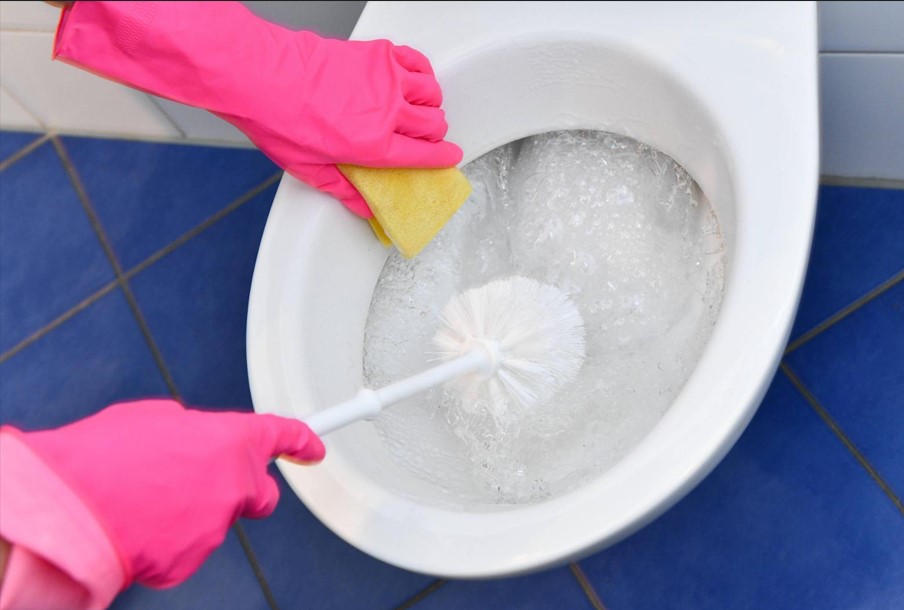
Once the cleaner has had time to work, use a toilet brush to scrub every part of the bowl.
Don’t forget to clean:
✔️ Under the rim
✔️ Around the water line
✔️ The sides of the bowl
✔️ The bottom of the bowl near the drain
Professional cleaners never rush this step. Taking an extra minute to scrub thoroughly can remove stains before they become permanent.
🚿 Step 5: Flush and Inspect
Flush the toilet while continuing to brush lightly so that clean water rinses away loosened dirt and cleaning solution.
Inspect the bowl carefully.
If stains remain, repeat the cleaning process instead of scrubbing aggressively, which can damage the porcelain finish.
🧼 Step 6: Disinfect High-Touch Surfaces
Cleaning isn’t complete until all frequently touched surfaces have been disinfected.
Remember to wipe:
🚪 Door handles
💡 Light switches
🚰 Sink taps
🪞 Countertops
🚽 Flush handle
These surfaces are often touched before and after using the toilet, making them hotspots for bacteria.
💧 How to Remove Tough Toilet Stains
Even well-maintained toilets can develop stubborn stains over time. Fortunately, different stains require different solutions.
🤎 Brown Stains (Hard Water Deposits)
Brown stains are usually caused by minerals such as iron and calcium found in hard water.
To remove them:
🥄 Add one cup of baking soda.
🍶 Pour in one cup of white vinegar.
⏳ Leave for 30 minutes.
🪥 Scrub thoroughly before flushing.
🟡 Yellow Stains
Yellow stains are commonly caused by urine deposits or mineral build-up.
Allow your toilet cleaner to remain in contact with the stain for a longer period before scrubbing. If necessary, gently use a wet pumice stone on porcelain surfaces.
⚫ Black Stains
Black stains often indicate mould or mildew caused by excess moisture.
Use a disinfectant specifically designed for mould removal and improve ventilation to reduce humidity in the bathroom.
🌸 How to Keep Your Toilet Smelling Fresh
A clean toilet should also smell fresh.
Simple habits make a big difference:
🌬️ Keep the bathroom well ventilated.
🪠 Flush with the lid closed.
🧹 Clean spills immediately.
🧼 Wash bathroom mats regularly.
🗑️ Empty the waste bin frequently.
🪥 Clean and disinfect the toilet brush holder.
🧴 Deep-clean your bathroom on a regular schedule.
❌ Common Toilet Cleaning Mistakes
Avoid these common errors that reduce cleaning effectiveness:
❌ Using the same cloth for the entire bathroom
❌ Forgetting the flush handle
❌ Ignoring underneath the toilet rim
❌ Mixing different cleaning chemicals
❌ Storing a dirty toilet brush
❌ Overlooking the toilet base
❌ Waiting until stains become permanent
Remember, consistent light cleaning is far easier than occasional heavy scrubbing.
🌱 Natural Toilet Cleaning Method
If you prefer environmentally friendly cleaning products, you can make an effective natural cleaner using ingredients already found in many kitchens.
Simply combine:
🧂 1 cup baking soda
🍶 1 cup white vinegar
Allow the mixture to fizz for about 30 minutes before scrubbing and flushing.
Although this method works well for regular maintenance and deodorising, commercial toilet cleaners are generally more effective for removing heavy limescale and stubborn stains.
📅 How often should you Clean your Toilet?
Keeping to a routine prevents dirt from building up.
🗓️ Daily: Wipe the toilet seat and flush handle.
🗓️ Weekly: Clean the entire toilet thoroughly.
🗓️ Monthly: Remove mineral deposits and deep clean hidden areas.
🗓️ Every 6 Months: Replace your toilet brush if worn.
⭐ Professional Cleaning Tips from Ekom Professional Cleaners
Professional cleaners don’t necessarily work harder—they work smarter. Here are a few simple habits that deliver outstanding results:
✔️ Allow cleaning products enough contact time to work effectively.
✔️ Use separate cleaning cloths for toilets and sinks to prevent cross-contamination.
✔️ Always wear gloves when cleaning toilets.
✔️ Replace worn toilet brushes regularly.
✔️ Store cleaning products safely away from children and pets.
✔️ Clean consistently rather than waiting for heavy dirt and stains to develop.
❓ Frequently Asked Questions
What is the best cleaner for a toilet?
A quality toilet bowl cleaner, combined with a sturdy toilet brush and a disinfectant for exterior surfaces, provides the best overall results.
Can baking soda and vinegar replace commercial cleaners?
Yes, they are excellent for regular cleaning and deodorising. However, stubborn stains, rust, and heavy limescale may require specialised cleaning products.
Why does my toilet still smell after cleaning?
The source of the odour may be the toilet base, floor drain, dirty toilet brush holder, hidden leaks, or poor ventilation rather than the bowl itself.
How often should I disinfect my toilet?
High-touch areas should be disinfected at least once a week and more frequently in busy households, offices, schools, and public facilities.
🏡 Final Thoughts
A clean toilet is one of the simplest yet most important ways to maintain a healthy home or workplace. By following these professional cleaning techniques and adopting a regular cleaning routine, you can prevent stubborn stains, eliminate harmful germs, and enjoy a bathroom that looks spotless and smells fresh every day.
If you would rather leave the hard work to experienced professionals, Ekom Professional Cleaners is here to help. Our trained team provides expert residential and commercial cleaning services, including bathroom deep cleaning, office cleaning, apartment cleaning, upholstery cleaning, post-construction cleaning, and move-in/move-out cleaning.
📞 Need a cleaner, healthier space? Contact Ekom Professional Cleaners today for a free quotation and experience professional cleaning you can trust.